
EPC C by 2030: What It Means for Your Rental Property

If you own a rental property in England, you've probably heard that the government wants all private rented homes to reach EPC Band C by 2030. You may have filed that information away under "something to deal with later."
That's understandable — 2030 still sounds a long way off. But with the government having confirmed the details earlier this year, and with a significant chunk of the country's rental housing stock needing work to get there, it's worth getting to grips with what's actually required sooner rather than later.
Here's what you need to know — without the jargon.
What's an EPC, and What Does Band C Mean?
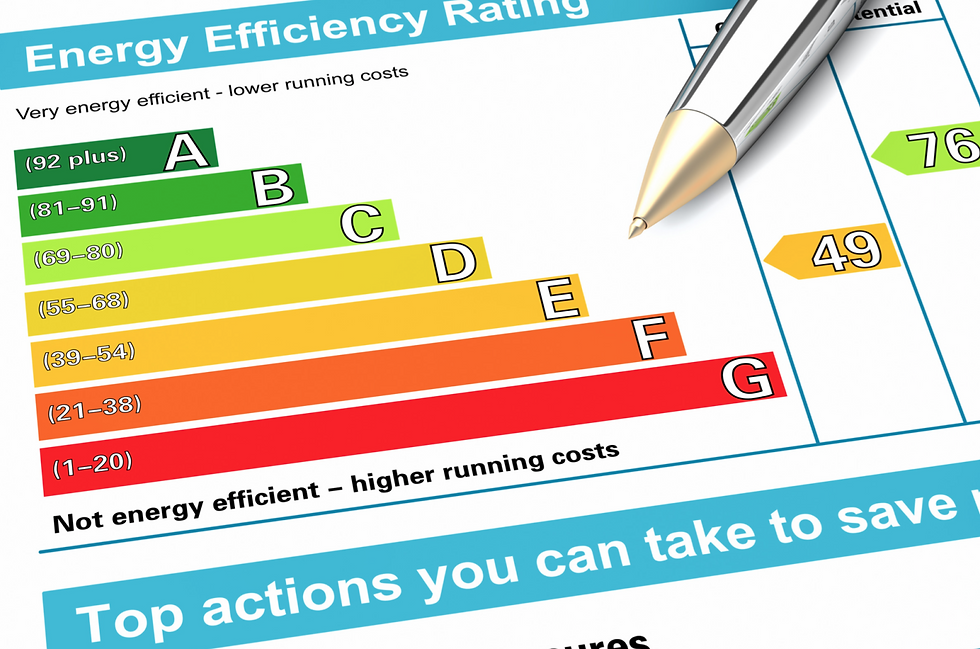
An Energy Performance Certificate rates a property's energy efficiency on a scale from A (most efficient) to G (least efficient). Every rental property in England needs a valid EPC, and right now, the minimum legal standard for letting is Band E — anything lower and you can't lawfully rent the property out without an exemption.
Band C is meaningfully higher than E. Think of it roughly as the difference between a well-insulated modern home and an older property with draughty windows and a dated heating system.
So What's Changing?
The government confirmed in January 2026 that all private rented properties in England and Wales will need to meet the equivalent of EPC Band C by 1 October 2030. That applies to all tenancies — new and existing — from that date.
There's also something worth knowing about timing: if your property already has an EPC rating of C or above, and that certificate was issued before 1 October 2029, it will be treated as compliant until the certificate expires. So a recent EPC C buys you time. An old one, or a D rating, means you've got work to do.
How Much Will It Cost?
The government has set a cost cap of £10,000 per property. That's the maximum you'll be expected to spend trying to get your property up to standard. If you hit that figure and the property still isn't there, you can register an exemption — which lasts for 10 years.
To put that in context: the government's own estimate puts the average spend at around £5,400 per property. For some properties, particularly well-maintained ones with decent insulation already in place, it could be considerably less. For older solid-walled houses without cavity walls, it could be more.
What Kind of Work Are We Talking About?
It depends entirely on the property. An EPC includes a recommendations section that sets out what improvements would move the rating up — this is genuinely useful and worth reading properly if you haven't before.
Common improvements that tend to make a meaningful difference include:
Loft insulation — often straightforward and relatively cheap, and one of the most effective upgrades for heat retention
Cavity wall insulation — if your property has unfilled cavity walls, this is usually a cost-effective improvement
Upgrading the boiler — an old, inefficient boiler can drag a rating down significantly
Draught-proofing and double glazing — smaller gains, but they add up
Solar panels or heat pumps — more significant investment, but increasingly supported by government grants through the Boiler Upgrade Scheme and Warm Homes Plan
Properties in conservation areas or listed buildings have more limited options, and the regulations include exemptions to reflect this — more on that below.
The New EPC System — A Heads Up
There's a wrinkle worth being aware of. The government is also overhauling the way energy performance is measured, replacing the current single A–G rating with a new dual-metric system based on fabric performance (how well insulated your building is) and heating system efficiency.
The fine detail of this new system is still being finalised. What that means in practice is that your current EPC rating doesn't tell you with complete certainty how your property will measure up under the new rules. A current Band C might still be fine. A current Band D might need less work than you'd expect — or more.
Secondary legislation setting out the full requirements is expected in 2027. At that point, the picture will be much clearer. In the meantime, the best thing you can do is make sure you have a current, accurate EPC for each of your properties.
What About Exemptions?
The regulations will include exemptions for landlords who genuinely can't reach the standard within the cost cap. The confirmed categories include:
Cost cap exemption — spent £10,000 and still not there? You can register an exemption for 10 years
Wall insulation exemption — not every property can take insulation, particularly older solid-walled or listed buildings
Consent exemptions — if you need permission from a freeholder or planning authority that you can't get
Heritage exemptions — for listed buildings where works would damage the property's character
Exemptions aren't automatic — they need to be registered — and the full detail is still being confirmed. But they exist precisely because the government recognises that not every property can reach Band C without disproportionate cost or disruption.
What Should You Do Now?
You don't need to start ripping out boilers today. But a few straightforward steps now will put you in a much better position:
Get an up-to-date EPC. If yours is more than a couple of years old, or you've made improvements since it was issued, a fresh assessment will give you an accurate picture of where you stand and what the recommendations are. It's the obvious starting point.
Read the recommendations section. Most people don't. It's worth it — it tells you what changes would move the needle and by roughly how much.
Plan ahead if you have multiple properties. Spreading works across the next few years is far less painful than a last-minute rush to 2030.
Look into available grants. The Boiler Upgrade Scheme and Warm Homes Plan both offer funding for certain improvements. Eligibility and funding levels change, but it's worth checking what's available before you commit to any significant work.
One More Thing
The 2030 EPC requirement is part of a broader picture of change for private landlords — alongside the Renters' Rights Act, Awaab's Law, and the new Decent Homes Standard. There's a lot coming at once, and it can feel overwhelming.
But for landlords who manage their properties well and keep them in good condition, most of this is less a revolution than a formalisation of good practice. The EPC requirement, in particular, is one where early action genuinely pays off — both in compliance terms and in keeping energy bills manageable for your tenants.
Need an EPC?
Ebor Property Co carries out Energy Performance Certificates across York and North Yorkshire. Whether you need one for a new tenancy or want to understand where your property currently sits ahead of the 2030 changes, we're happy to help.
Ebor Property Co provides property inventory inspections and Energy Performance Certificates across York and North Yorkshire. AIIC accredited. TDS recognised. DEA qualified.


I was browsing a soccer fan forum looking for team news when a sidebar banner caught my eye. It had a surfing theme that seemed out of place on a football site. I clicked it and ended up at nalu casino. I had lost £65 on a terrible virtual racing game earlier that morning. The in-game leaderboard showing recent big wins gave me a slight boost of confidence. I played a beach volleyball slot with a £5 deposit. The serve bonus feature spiked the ball right into a £270 win. Afternoon everyone, do you ever click random banners on sports sites?
I searched online for information about cryptocurrency platforms available to users in Ireland and found a detailed review. I liked that the Best crypto casinos no deposit 2026 article covered not only digital payments themselves but also practical selection criteria: licensing, withdrawal speed, supported cryptocurrencies, fees, security, and KYC requirements. It also covered the specifics of BTC, ETH, USDT, LTC, and other options, as well as mobile access. If you're in Ireland and want to better understand these platforms, I'd recommend reading this review first and then independently verifying the current terms and availability of your chosen service.