
How Should I Prepare My Property for an EPC in York?

How Should I Prepare My Property for an EPC in York?
If you've just booked an Energy Performance Certificate assessment, or you're thinking about it, you might be wondering whether there's anything you need to do beforehand. The short answer is yes, a little preparation can genuinely make a difference to your rating. Nothing complicated, nothing expensive. Just a few simple steps that help your assessor capture an accurate picture of your property.
What Does an EPC Assessor Actually Look At?
An EPC assessor uses government-approved RdSAP software to evaluate how energy efficient your home is. They're looking at the fabric of the building and its fixed services, not how tidy it is or how you use it day to day. The main elements assessed include:
Wall construction and insulation
Roof and loft insulation
Floor insulation (where applicable)
Windows and glazing type
Heating system, controls, and fuel type
Hot water system
Fixed lighting
Any renewable energy systems such as solar panels or heat pumps
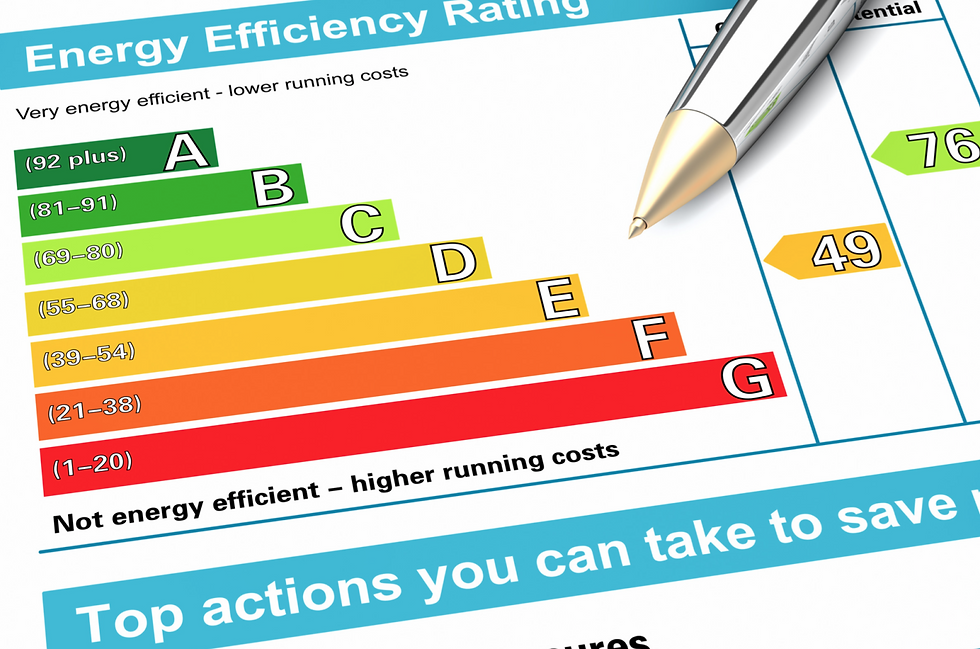
Each element contributes to an overall score, which translates to a rating between A and G. The better the fabric and systems, the higher the rating.
Simple Steps You Can Take Before the Assessment
You don't need to renovate your home before your assessor arrives, but a few small things can have a meaningful impact on your result.
Make sure every room is accessible
Your assessor needs to get into every habitable room, including any loft rooms, outbuildings that form part of the dwelling, and conservatories. If a room is locked or blocked, it can't be assessed accurately.
Clear the loft hatch
Loft insulation is one of the highest-value elements in the assessment. If your assessor can't get into the loft, or can't see clearly because access is obstructed, they may have to make conservative assumptions about what's there. Move anything stacked below the hatch and make sure there's a clear line of sight into the loft space.
Switch your bulbs to LED if you haven't already
This is a quick, cheap win. Fixed LED lighting throughout the property is counted as low-energy and scores positively. If you still have halogen or incandescent bulbs in fixed fittings, swapping them out before the assessment is one of the easiest improvements you can make. It costs very little and the assessor will record what's installed on the day.
Gather your paperwork
This is where a lot of homeowners leave rating points on the table. RdSAP methodology allows assessors to use documented evidence to assign better values to certain property features, but without that evidence they're required to default to more conservative assumptions. Here's what's worth looking out for:
Window installation certificates (FENSA or CERTASS)
If your double or triple glazing was fitted by a registered installer, they should have issued a FENSA or CERTASS certificate. These confirm the installation date and the glazing specification. This matters because the age of installation affects the U-value applied in the assessment, with newer glazing carrying better values. If you can't find the certificate, check whether it's registered online at fensa.org.uk using your postcode.
Extension and loft conversion documentation
If your property has had an extension or loft conversion built under Building Regulations, the completion certificate is worth finding. This indicates that the work was inspected and signed off, which allows the assessor to apply better insulation assumptions for those elements rather than defaulting to the construction era of the original building.
Cavity wall insulation certificates
If your cavity walls were insulated, either as part of a government scheme or privately, there should be a guarantee issued by the installer, typically through CIGA (Cavity Insulation Guarantee Agency). This is significant because an assessor cannot assume cavity fill is present just by looking at the wall. Without documentary evidence, they'll often record it as an unfilled cavity, which has a noticeable downward effect on your rating.
Remedial insulation certificates
Similar to cavity wall, if you've had external wall insulation, internal wall insulation, or underfloor insulation installed, any certificates, guarantees, or installer paperwork help the assessor apply the correct values. Works carried out under schemes like ECO (Energy Company Obligation) will usually have associated documentation, so dig it out if you have it.
Solar panel and renewable energy documentation
If you have solar PV panels, a heat pump, or another renewable technology installed, the MCS (Microgeneration Certification Scheme) certificate or installer paperwork confirms the system specification. This allows your assessor to record the correct capacity and technology type, which feeds directly into your rating.
Boiler installation or service records
Your boiler's make and model will be looked up in the Product Characteristics Database (PCDB), which holds efficiency data for most modern boilers. However, if your boiler is older or less common, having the installation manual or any service records to hand can help confirm the model. It also allows the assessor to verify the installation year, which affects the efficiency values applied.
What You Don't Need to Do
An EPC assessment is a data-gathering exercise, not a property inspection. Your assessor isn't looking at décor, cleanliness, or general condition. You don't need to:
Redecorate or carry out any maintenance
Deep clean before they arrive
Have the garden tidy
Move furniture (though clear access to meters, the boiler, and the loft hatch is helpful)
There's no need to be stressed about the visit. It's a methodical, room-by-room process and most assessors will talk you through what they're recording as they go.
How Long Does an EPC Take in York?
For a typical mid-terrace or semi-detached property, the on-site visit usually takes between 30 and 45 minutes. Larger or more complex properties, such as detached houses, properties with extensions, or those with mixed construction types, can take up to an hour or slightly longer. The assessor will then process the data and lodge the certificate on the national EPC register, usually within 24 hours.
What Happens After the Assessment?
Once your EPC is lodged, you'll receive a copy by email. It will be registered on the National EPC Register, where it can be accessed by prospective buyers, tenants, or letting agents at any point. The certificate is valid for ten years unless significant works are carried out that would change the rating, in which case it's worth commissioning a new assessment to reflect the improvements.
Your EPC will include a current rating and a potential rating, along with a list of recommended improvements. These recommendations are based on your specific property and are worth reviewing if you're planning any renovation work, particularly with the proposed EPC C minimum standard for rental properties on the horizon.
Book Your EPC in York
Ebor Property Co provides EPC assessments across York and the surrounding area, carried out by a qualified and accredited Domestic Energy Assessor. If you're a homeowner preparing for a sale, a landlord keeping your portfolio compliant, or simply want to understand your property's energy performance, get in touch to book your assessment.


Cold days around Yorkshire truly remind local landlords how critical proper building fabric insulation is before booking domestic energy assessments. While upgrading fixed heating controls or renovating large glass conservatory extensions near York high streets, smart owners buy professional tint rolls from https://www.tintfit.com/shop/uv-protection to reject solar heat and block fabric fading.